Is a One-Page Website Enough for Your Business?
One of the things I sometimes hear from people when they’re planning a new website is: “I think I probably need five pages.” And sometimes they do.
But sometimes I look at the business, the offer and the way they actually get their clients and think: you really don’t.
There’s an assumption that a “proper” business website needs an About page, a Services page, a Contact page, perhaps a Portfolio page and a few other pages for good measure. But I don’t think the number of pages is what makes a website feel established or professional.
Sometimes, a professionally designed one-page website is exactly enough.
In this guide, I talk about:
When is a one-page website enough?
For me, the clearest fit is usually a business with one main offer, one clear type of client and a fairly straightforward way of working together.
Think of a counsellor offering one-to-one therapy. A coach with one main coaching service. A freelance consultant. A personal stylist. A fitness trainer offering private one-to-one sessions.
They may have a couple of different options or packages, but fundamentally the business is simple to understand.
You don’t necessarily need an entire About page if one thoughtful section is enough to explain who you are, your experience and why someone might want to work with you.
You don’t need a separate portfolio page if there isn’t a body of work someone needs to browse.
And you don’t need three separate service pages if everything essentially comes back to one core offer.
If you offer one straightforward one-to-one service, to one clear type of client, and there isn’t masses to explain or show, a one-page website can often be more than enough.
This is why they can work particularly well for some coaches and consultants, as well as therapists and wellness professionals with a simple one-to-one offer.
Your website might not need to be your main source of clients
This is another situation where I think a one-page website can work brilliantly.
Not every business relies heavily on Google to bring in new enquiries.
Perhaps most of your work comes through recommendations. Maybe you’ve built a strong Instagram following. Perhaps you’re well known locally or you regularly meet potential clients through networking or other professional connections.
In those cases, the job of your website can be slightly different.
Someone may already have heard about you.
They’ve been given your name by a friend, found you on Instagram or met you somewhere and thought:
I’m interested. Let me have a look at their website.
At that point, your website doesn’t necessarily need to take a complete stranger through a huge educational journey.
Sometimes it simply needs to say:
Yes, I’m a professional. This is what I do. This is who I help. Here’s why you can trust me. And here’s how you can work with me.
That can all happen beautifully on one page.
And, frankly, having a polished one-page website is very different from sending somebody to an Instagram account because you haven’t quite got around to creating a website yet.
It gives your business a proper home.
A one-page website doesn’t need to feel basic
A good one-page website shouldn’t be basic and bland - it should still feel like an experience.
There should be a sense of movement as you scroll through it with interesting design elements. Each section should lead naturally into the next and answer the questions someone is likely to have as they decide whether you’re right for them.
I still want the normal signals of trust and authority I’d expect from a larger website.
That might include:
a strong hero section that immediately explains what you do and who it’s for
a section that helps the visitor recognise themselves and what they need
your main service or way of working together
an introduction to you and your experience
testimonials or other proof
professional accreditations, features or credentials where relevant
frequently asked questions
a clear next step
You can fit a surprising amount into one page without it feeling crowded.
The key is structure.
I want someone to reach the bottom feeling as though they’ve been taken somewhere - not as though they’ve just scrolled through a long collection of unrelated blocks.
One page doesn’t mean tiny
My own one-page Squarespace websites are usually fairly substantial.
They might have eight, nine or ten carefully planned sections, as well as the header, navigation and footer.
I also include a simple dedicated contact page. I think of this as a one-page-plus website - the main experience remains one long, beautifully structured page, but there’s still a clean destination for enquiries.
So when somebody says to me, “But is a one-page website enough? I don’t think of it as creating less website. I think of it as creating exactly as much website as the business needs.
A couple of real examples
I’ve created one-page websites for very different businesses, and one of the reasons I like them is that they force you to be really clear.
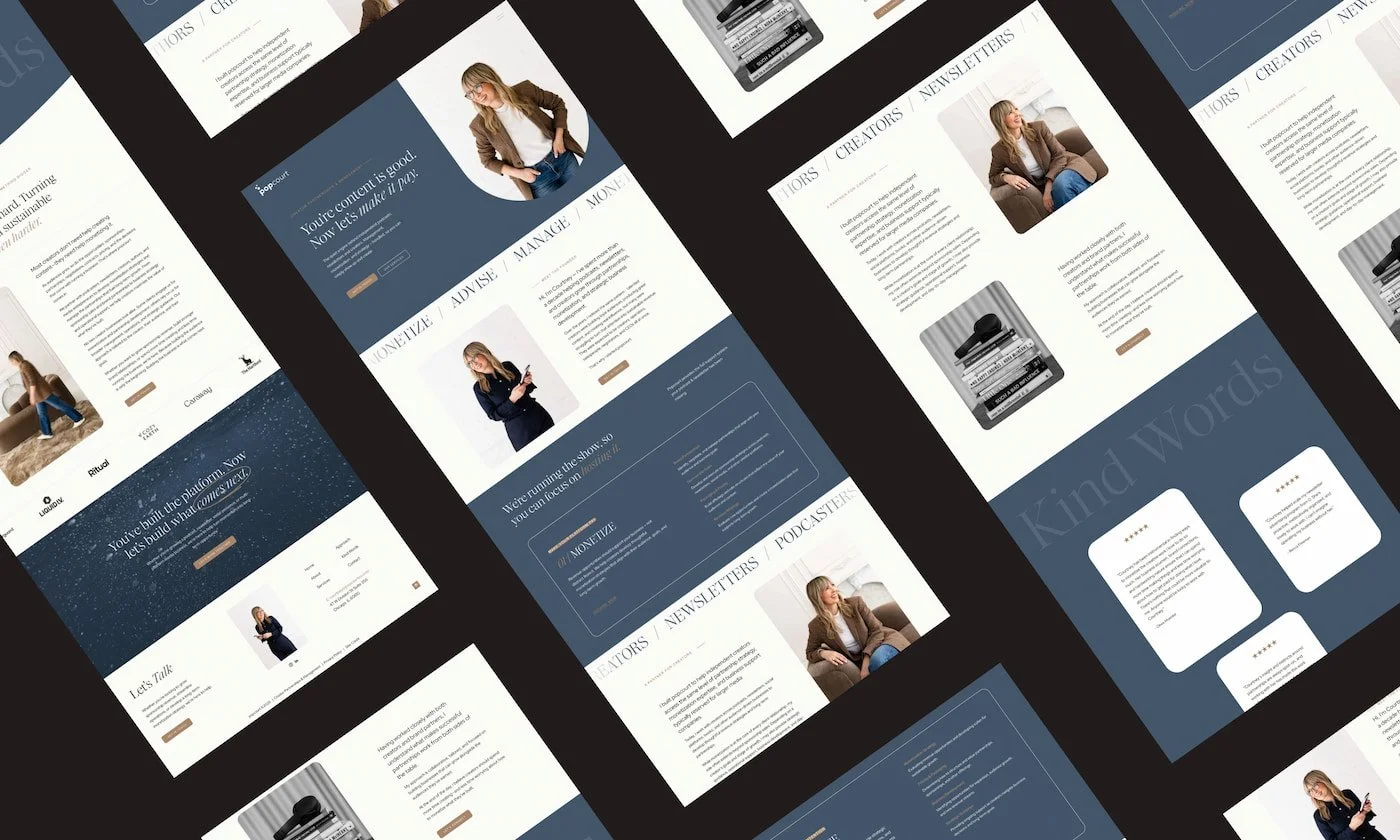
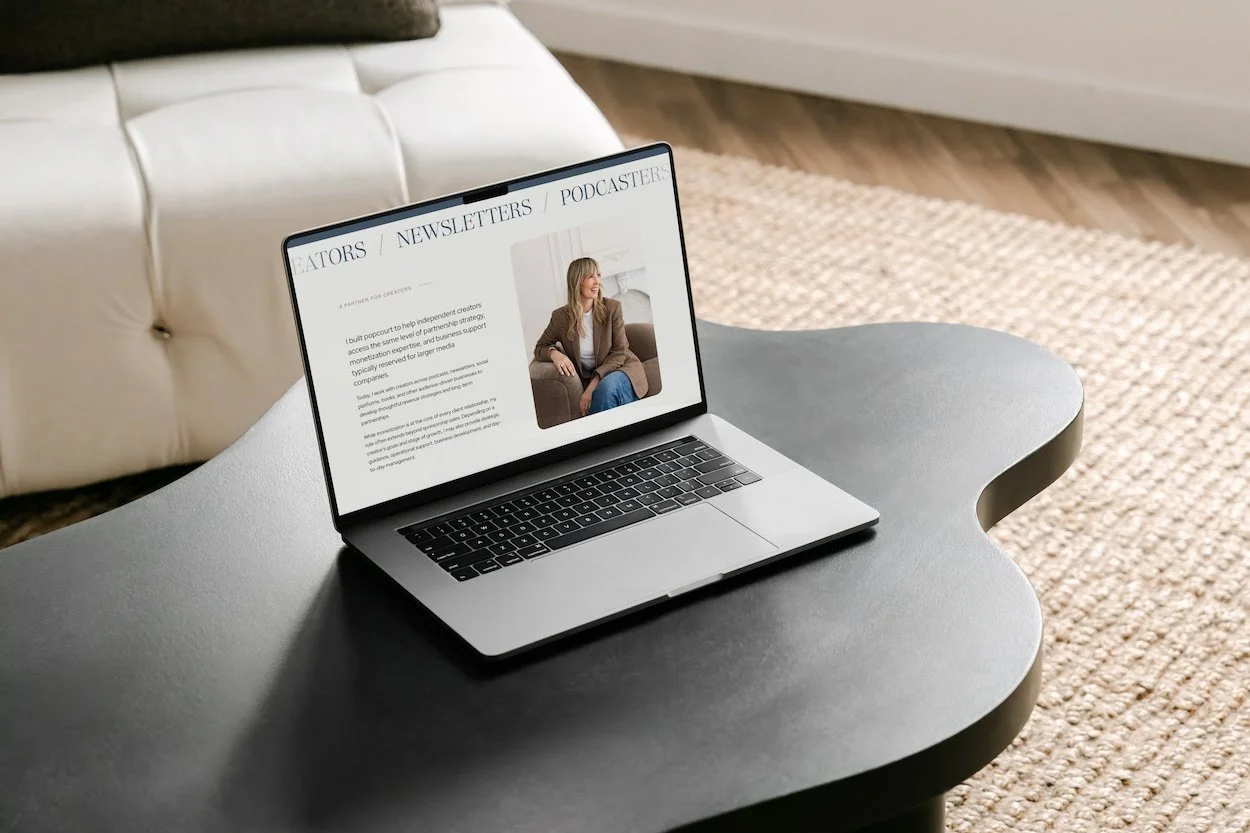
With PopCourt, for example, there was already an established business and a clear reputation behind it.
Founder Courtney had three related areas of work - monetisation, management and strategic advice - but we didn’t need to spread them across several pages just because we could.
We brought everything together into one strong, carefully structured page that explained what PopCourt did, established Courtney’s expertise and gave prospective clients a clear way to work with her.
It didn’t need to be sprawling. In fact, I think spreading that relatively concise offer over five pages would have weakened it.
A punchy, carefully ordered page suited the business far better.
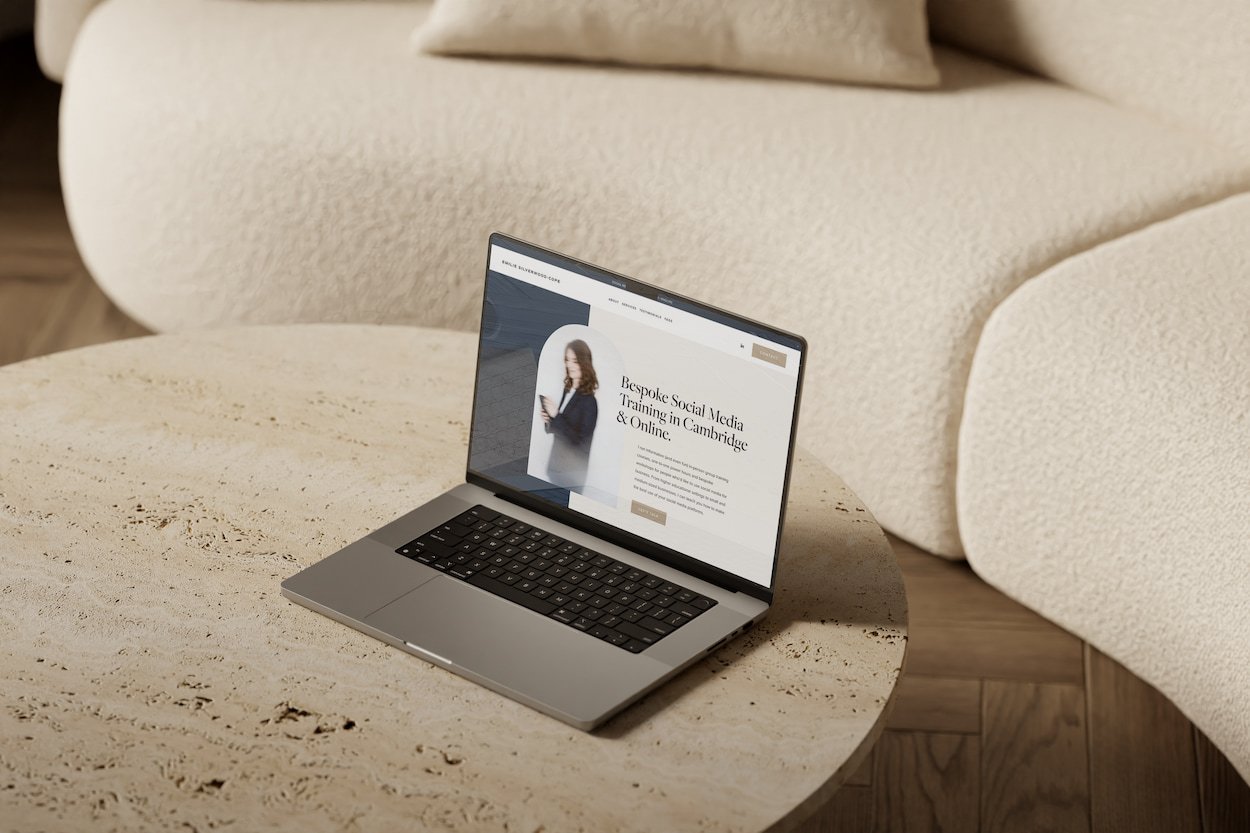
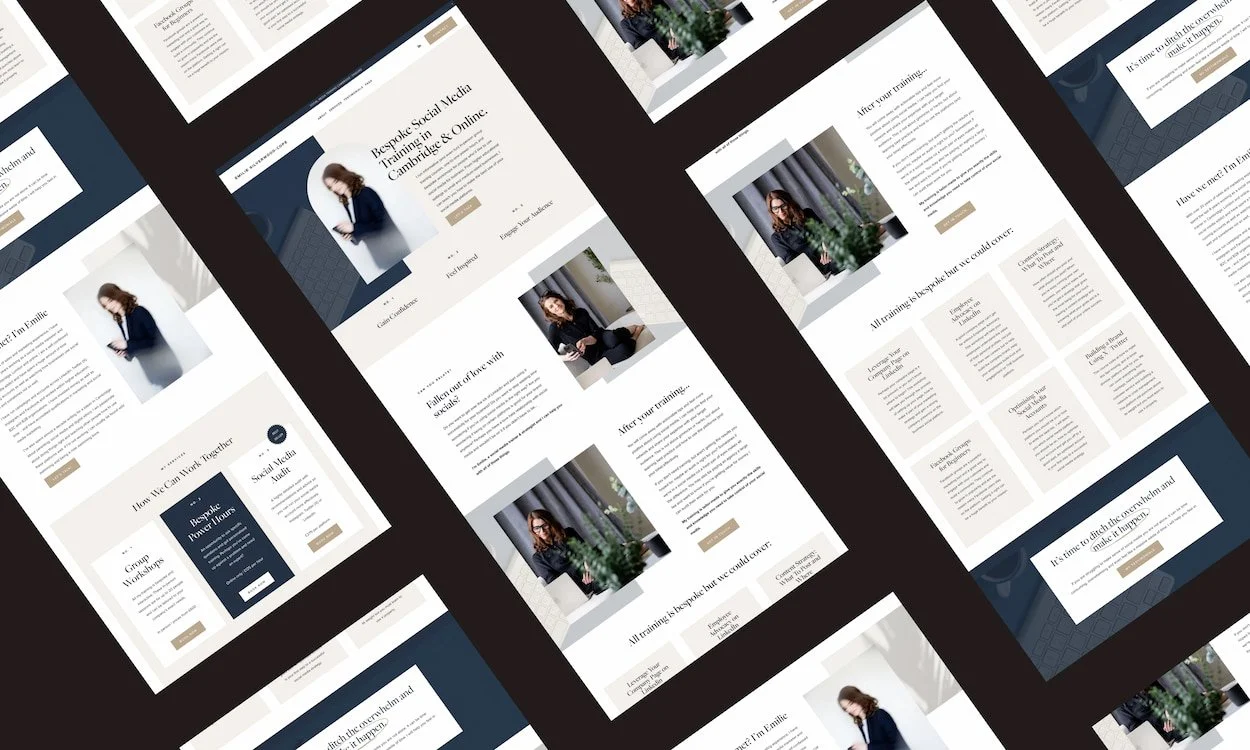
Another one-page project I still really love is Emilie Silverwood-Cope’s.
Emilie is a social media consultant and trainer, with several different ways people can work with her - including workshops, one-to-one support and audits - but everything sits under one very clear area of expertise.
There was actually quite a lot to bring together, but we were able to give each part enough space on one carefully structured page without making the website feel long or complicated.
It’s still one of my favourite examples of how a one-page website can feel polished, warm and really substantial without needing to become a larger site.
That’s something I come back to a lot with clients:
More pages don’t automatically make a better website.
Sometimes they simply create more places for someone to click around without actually learning anything new..
When would I not recommend a one-page site?
There are plenty of businesses where I would steer somebody towards a larger site.
Photography is a good example.
Choosing a photographer is often an emotional decision, and their work needs room to breathe. I usually want potential clients to be able to explore galleries, see different types of shoots or weddings and spend some time immersed in the work.
Trying to squash all of that into one page can make the whole thing feel rushed.
I’d also be cautious about a one-page site if you have:
several genuinely different services
multiple audiences with very different needs
lots of case studies or portfolio work
several locations you want to target
a lot of information people need before they’re ready to enquire
several different topics or services you want to rank for in Google
There comes a point where one page stops feeling beautifully concise and starts feeling like five pages desperately trying to live on top of one another.
That isn’t the aim.
If your business does need more room, that’s when one of my larger website in a week service - Made by Friday™ - may make more sense.
Can a one-page website rank on Google?
Yes - but this is where I think it’s important to be realistic rather than make sweeping SEO promises.
A one-page website can absolutely be optimised properly.
You can still have a clear primary keyword, a properly structured heading hierarchy, strong page title and description, useful copy, good image alt text, FAQs, schema and all the usual SEO foundations.
And for a focused business in a less competitive niche or location, that one page may be perfectly capable of appearing in search.
But a larger website naturally gives you more SEO opportunities.
You can have separate pages targeting different services or locations. You have more opportunities to build internal links. You can publish helpful resources and articles. You have more pages that other websites may choose to link to.
That matters particularly in competitive markets.
If you were a wedding photographer trying to rank for a highly competitive search in London, for example, I would be very unlikely to suggest putting everything onto one page and hoping that was enough.
But if you’re a counsellor offering one particular type of therapy in a smaller town, the calculation can be very different.
The website needs to suit the business and the competitive landscape, rather than following a rule about how many pages everybody should have.
Your first website doesn’t have to be your forever site
I think people sometimes build too much at the beginning because they’re trying to anticipate every possible version of the business they might have in three years’ time.
You really don’t have to.
If your business is simple now, it is perfectly reasonable for your website to be simple now.
A good one-page website can grow with you.
Later, you might decide that one particular service deserves its own page. You might add a proper About page, start writing useful articles or build out a portfolio.
I would far rather see somebody launch one excellent page that clearly represents the business they have today than spend months trying to fill five pages with copy they don’t actually need.
So, is a one-page website enough for your business?
Possibly.
If you have one clear audience, one main offer, a fairly simple one-to-one service and you don’t need lots of pages to explain or prove what you do, a one-page website may be exactly enough.
It can also be a brilliant solution if most of your clients already arrive through referrals, social media or word of mouth and you simply need a polished, professional place to send them.
The important thing is that it shouldn’t feel like the budget version of a larger website.
It should still feel thoughtful, warm and complete.
It should take someone from the very top of the page to the bottom and leave them thinking:
Yes. I understand this business. I trust this person. And I know what to do next.
That, ultimately, is the job of a good website — whether it has one page or twenty.
Your questions answered
-
Absolutely. A one-page website can feel just as polished and established as a larger site when it has strong design, thoughtful structure, clear messaging and the right trust signals. The number of pages isn’t what makes a business look professional.
-
They often work particularly well for counsellors, coaches, consultants, personal stylists, fitness professionals and other small businesses offering one clear service to one main audience.
-
Yes. A one-page website can still have strong SEO foundations and rank for relevant searches. However, a multi-page website gives you more opportunities to target different services, keywords and locations, which can be important in more competitive markets.
-
At minimum, I’d usually want a strong opening section, a clear explanation of what you do and who it’s for, information about your service, an introduction to you, testimonials or other proof, FAQs and a strong call to action.
-
Yes. A one-page website can be a really sensible starting point. You can add service pages, an About page, a portfolio or blog later as your business and marketing needs grow.
-
One-page websites can work particularly well for counsellors, coaches, consultants, personal stylists, fitness trainers and other service-based businesses with one clear offer and one main type of client. They’re especially suited to businesses that don’t need a large portfolio, lots of separate service pages or a great deal of explanation before someone is ready to enquire.
Thinking a one-page website might be good for your business?
My one-page Squarespace websites are designed for small businesses that need something beautifully considered, professional and strategically put together - without building a larger website they simply don’t need.